










Introduction
Artificial Intelligence (AI) is transforming industries across the globe, enabling automation, efficiency, and innovation at an unprecedented scale. However, as defenders adopt AI to strengthen cybersecurity, threat actors are leveraging the same technology to launch more sophisticated and scalable attacks.
AI-driven cyber attacks represent a significant shift in the threat landscape. They are faster, more adaptive, and increasingly difficult to detect using traditional security measures. Understanding how these attacks work—and how to defend against them—is now critical for organisations of all sizes.

What Are AI-Driven Cyber Attacks?
AI-driven cyber attacks involve the use of machine learning algorithms, automation, and data analysis to enhance the effectiveness of malicious activities. Unlike traditional attacks, which often rely on manual execution or static scripts, AI-powered attacks can:
- Learn from data in real time
- Adapt to defensive measures
- Automate decision-making processes
- Scale operations with minimal human intervention
This evolution allows attackers to move from opportunistic tactics to highly targeted and intelligent campaigns.
Common Types of AI-Driven Cyber Attacks
1. Intelligent Phishing Campaigns
AI enables attackers to craft highly personalised phishing emails by analysing publicly available data, social media activity, and previous communications. These emails are more convincing and harder to detect than traditional phishing attempts.
Natural Language Processing (NLP) allows attackers to generate messages that mimic tone, writing style, and context—making them appear legitimate even to trained professionals.
2. Deepfake and Social Engineering Attacks
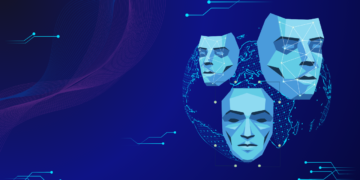
Deepfake technology can replicate voices and faces with alarming accuracy. Attackers use this to impersonate executives, colleagues, or trusted contacts.
For example, an employee might receive a phone call that sounds exactly like their CEO, instructing them to transfer funds or disclose sensitive information. These attacks exploit trust rather than technical vulnerabilities.
3. Automated Vulnerability Discovery
AI tools can scan systems, applications, and networks at high speed to identify vulnerabilities. Unlike manual penetration testing, AI-driven scanning can continuously probe for weaknesses and prioritise exploitable targets.
This reduces the time between vulnerability discovery and exploitation—putting organisations at greater risk.
4. AI-Powered Malware
Modern malware can use AI to modify its behaviour in real time to evade detection. This includes:
- Changing code signatures to bypass antivirus tools
- Adjusting attack patterns based on system responses
- Remaining dormant until optimal conditions are detected
Such malware is often referred to as “polymorphic” or “adaptive” malware.
5. Credential Stuffing and Brute Force Optimisation
AI can analyse login patterns and optimise credential-based attacks by predicting likely password combinations or identifying weak authentication points.
This increases the success rate of attacks while reducing noise—making detection more difficult for security teams.
Why AI-Driven Attacks Are More Dangerous
AI introduces several advantages for attackers:
- Speed: Automated attacks can operate at machine speed
- Scale: Thousands of targets can be attacked simultaneously
- Precision: AI enables highly targeted attacks with minimal guesswork
- Evasion: Adaptive behaviour helps bypass traditional security controls
For defenders, this means the window to detect and respond to threats is shrinking.
How Organisations Can Defend Against AI-Driven Threats
1. Adopt AI-Enhanced Security Tools
Defenders must fight AI with AI. Security platforms such as SIEM and XDR solutions increasingly incorporate machine learning to detect anomalies and respond in real time.
2. Strengthen Identity and Access Management
Implementing Multi-Factor Authentication (MFA), least privilege access, and zero trust architecture significantly reduces the effectiveness of credential-based attacks.
3. Invest in Security Awareness Training
Employees remain a primary target. Regular training should include awareness of deepfakes, advanced phishing techniques, and social engineering tactics.
4. Continuous Monitoring and Threat Hunting
Security Operations Centres (SOCs) should focus on proactive threat hunting and behavioural analysis rather than relying solely on signature-based detection.
5. Patch Management and Vulnerability Management
Timely patching reduces the attack surface and limits the effectiveness of automated vulnerability discovery tools used by attackers.
The Role of SOC Analysts in an AI-Driven Landscape
Security Operations Centre (SOC) analysts are at the frontline of defence. As AI-driven attacks become more common, analysts must:
- Understand attacker behaviour and tactics (e.g., MITRE ATT&CK framework)
- Use advanced SIEM tools such as Microsoft Sentinel or Splunk
- Analyse anomalies rather than relying only on known signatures
- Continuously upskill to keep pace with evolving threats
The role is shifting from reactive monitoring to proactive threat detection and response.
Conclusion
AI-driven cyber attacks are not a future concern—they are already here. As attackers continue to innovate, organisations must evolve their security strategies to match this new reality.
The key to resilience lies in combining advanced technology with skilled professionals, strong processes, and continuous awareness. In the age of AI, cybersecurity is no longer just about defence—it is about staying one step ahead in an intelligent and adaptive threat landscape.
Final Thought
AI is a powerful tool. Whether it strengthens your defences or becomes your greatest vulnerability depends on how effectively you understand and manage it.